Thursday, September 3, 2015

Japanese Dwarf Flying Squirrel

This is one of the flying squirrel species. They are smaller as compared to Japanese giant flying squirrels. Majorly, this species lives in sub-alpine forest that is found in Japan. They are 14-20 centimeters and their tail is about 10-14 centimeters. They approximately weigh 150- 220 grams. They are nocturnal; both female and male are of the same size. Their berry is white and their back covered with grey brown hair. It has a tail that is flattened and large eyes. During the day, you can only find them in holes in trees. The nests that these types of squirrels live are called dreys and can easily are seen on trees. These nests are made on tree cavities and tree trunks. Such nests are build using leaves and sticks wrapped with strands of grass. Western squirrel makes two nests. One of these two nests is larger in size and well covered. They use this nest in winter and also taking care of young ones. It leaps from one tree to the other using a membrane known as patagium. The Japanese dwarf flying squirrel eats various types of foods. They include seeds, walnuts, acorns and other types fungi that are found in the forest. It takes a hanging posture when eating. In case it wants to pick food that is spread on the ground, it will only extend its body within its immediate radius without necessarily moving the hind legs. This species was first found in Canada, western North America and in the United States. It is the only species that has evolved differently from other sciuridae. If you compare the morphology of mandible and genetic code, you will realize a great difference between Japanese dwarf flying squirrel and other sciuridae. The Japanese dwarf flying squirrel has a mandible which has a coronoid process which the dwarf tree squirrel lacks. It has also a less elongated mandible compared to marmot. Though they are of the same species, they as well have different genetic codes. Pteromys Volans and pteromys momonga have different karyotypes but same number of chromosomes. This difference came about due to tandem fusion, inversion or deletion of Y chromosomes and autosomes. Pteromys Volans has fifteen percent DNA as compared to pteromys momonga. This is a brief history of Japanese dwarf flying squirrels, how they live and their habitat and what they feed on. They are very unique species in the flying squirrels family.

Monday, August 24, 2015

Greater Glider

The greater glider (Petauroides volans) is a small gliding marsupial found in Australia. It is not closely related to the Petaurus group of gliding marsupials but instead to the lemur-like ringtail possum (Hemibelideus lemuroides), with which it shares the subfamily Hemibelideinae. The greater glider is nocturnal and is a solitary herbivore feeding almost exclusively on Eucalyptus leaves and buds. Like its relative the lemur-like ringtail, the greater glider is found in two forms: a sooty brown form, or a grey-to-white form. The greater glider is found in eucalypt forest from Mossman, Queensland, to Daylesford, Victoria. Greater gliders have a head and body about 39 to 43 centimetres (15 to 17 in) long, with the females being generally larger than the males. Their body is covered with a shaggy coat of fur that increases their apparent size, and the tail is long and bushy, ranging from 44 to 53 centimetres (17 to 21 in). The head is short, but with a pointed muzzle, and large ears fringed and backed with long fur. Each side of the body bears membranes stretching between the elbow and the ankle, that give the animal the ability to perform controlled glides. This is in contrast to other gliding marsupials (such as the sugar glider) that have gliding membranes stretching from the wrists to the ankles. The feet have strongly recurved claws to grip onto bark or other surfaces. There are five toes on each foot, with the first toe on the hind foot, and the first two toes on the fore foot, being opposable. The fur is soft and up to 60 millimetres (2.4 in) long; the colour is variable within the same populations, ranging from white to brown and charcoal. Body mass varies clinally from about 1,600 grams (3.5 lb) in southern Victoria to about 600 grams (1.3 lb) in north Queensland. Heat management in the greater glider is performed by licking extremities and the ventral body surface, with direct evaporation being the main method of the cooling. Furthermore, the glider can use its gliding membranes to reduce heat loss by increasing the layer of insulation at the skin surface. However, the greater glider is not well equipped to handle high ambient temperatures, as it inefficiently uses water for evaporation via salivation even though arboreal habitats are often limited in water accessibility.

Cape Genet

Also known as Large-Spotted Genet has a shoulder height of 210 mm, but this species is short legged. The elongated body has a length of 460 mm and a mass of 1.6 kg. The thick, black and whitish-grey ringed tail is long at 400 mm. Claws are short, partially retractable and are an aid to climbing. No sexual dimorphism is obvious. Rows of rusty spots enclosed with black rings cover the brown or tan upperparts. The black rings merge into lines on the neck. The belly is whitish. They have white patches around the mouth, nose and below the eyes. The Large-Spotted Genet can be confused with the Small-Spotted Genet, the main difference being the white tipped tail of the latter compared to the black tipped tail of the large spotted species. Another difference is the entirely black spots of the small spotted genet which are without a rusty centre. The bulk of its diet consists of rodents and other small mammals such as insectivores, whereas birds, snakes and amphibians are secondary prey. Invertebrates only make up a small portion of its diet. Will also ingest fruit. Normally breeding takes place during the warmer months. The Large-Spotted Genet gives birth to an average of three young per litter after a gestation period of about 70 days. Indications are that the young remain in nests, made above ground, until they are weaned. This is a solitary species, only occurring in groups during the mating season. Well wooded and watered areas are preferred habitats, particularly forests and closed woodlands. Some dense vegetation for shelter and close proximity to water are essential habitat requirements. The Large-Spotted Genet is distributed in South Africa from the southern and eastern coast, KwaZulu-Natal, Mpumalanga, Northern Province and extending into neighbouring countries.

Sunday, August 23, 2015

Sea Otter

This aquatic member of the weasel family is found along the coasts of the Pacific Ocean in North America and Asia. The sea otter spends most of its time in the water but, in some locations, comes ashore to sleep or rest. Sea otters have webbed feet, water-repellent fur to keep them dry and warm, and nostrils and ears that close in the water. Sea otters often float at the water's surface, lying on their backs in a posture of serene repose. They sleep this way, often gathered in groups. Otters sometimes float in forests of kelp, or giant seaweed, in which they entangle themselves to provide anchorage in the swirling sea. These aquatic otters do more than sleep while floating on their backs. They are often seen with a clam or mussel and a rock that has been deftly snared from the ocean floor. Otters will place the rock on their chests, and repeatedly smash the shellfish against it until it breaks open to reveal the tasty meal inside. They also dine on such aquatic creatures as sea urchins, crabs, squid, octopuses, and fish. Sea otters are the only otters to give birth in the water. Mothers nurture their young while floating on their backs. They hold infants on their chests to nurse them, and quickly teach them to swim and hunt. Sea otters are meticulously clean. After eating, they wash themselves in the ocean, cleaning their coat with their teeth and paws. They have good reason to take care of their coats—it helps them to remain waterproof and insulated against the cold. Sea otters have thick underfur that traps air to form an insulating layer against the chilly waters (they have no insulating fat). This coat is invaluable to otters, but it has worth to some humans as well.

Black Swan

The black swan (Cygnus atratus) is a large waterbird, a species of swan, which breeds mainly in the southeast and southwest regions of Australia. The species was hunted to extinction in New Zealand, but later reintroduced. Within Australia they are nomadic, with erratic migration patterns dependent upon climatic conditions. Black swans are large birds with mostly black plumage and red bills. They are monogamous breeders that share incubation duties and cygnet rearing between the sexes. Black swans have been introduced to various countries as an ornamental bird in the 1800s, but have escaped and formed stable populations. A small population of Black swans exists on the River Thames at Marlow, and near the River Itchen, Hampshire. Described scientifically by English naturalist John Latham in 1790, the Black Swan was formerly placed into a monotypic genus, Chenopis. Black swans can be found singly, or in loose companies numbering into the hundreds or even thousands. Black swans are popular birds in zoological gardens and bird collections, and escapees are sometimes seen outside their natural range. Black swans are mostly black-feathered birds, with white flight feathers. The bill is bright red, with a pale bar and tip; and legs and feet are greyish-black. Cobs (males) are slightly larger than pens (females), with a longer and straighter bill. Cygnets (immature birds) are a greyish-brown with pale-edged feathers. A mature black swan measures between 110 and 142 centimetres (43 and 56 in) in length and weighs 3.7–9 kilograms (8.2–19.8 lb). Its wing span is between 1.6 and 2 metres (5.2 and 6.6 ft). The neck is long (relatively the longest neck among the swans) and curved in an "S"-shape. The black swan utters a musical and far reaching bugle-like sound, called either on the water or in flight, as well as a range of softer crooning notes. It can also whistle, especially when disturbed while breeding and nesting.

Hyacinth Macaw

Many people are familiar with macaws and parrots as pet store animals. It might be difficult, then, for people to imagine what these large, loud, beautiful birds look like in the wild. The spectacular flash of color of a wild macaw is becoming more and more of a rare sight. The largest species of macaw, the brilliant-blue hyacinth grows to be up to 40 inches (1 m) long. The hyacinth macaw survives today in three known distinct populationin southern Brazil, eastern Bolivia and northeastern Paraguay. It is possible that smaller, fragmented populations occur in other areas of its range. Although it is difficult to estimate, some people believe there were more than 100,000 hyacinth macaws before the arrival of Amerindians in South America. In 1990, the wild population was estimated to be 2,500 birds. The world’s captive population is probably much larger, numbering in the thousands. The hyacinth macaw is found primarily in riverside topical rain forest and palm swamps. Its habitat varies throughout its range, however, from seasonally moist forest with a broken canopy, to mature palm forest, to grassy marshes. The hyacinth macaw nests in holes in trees. The clutch size is two or three eggs, although usually only one fledgling survives. The hyacinth macaw eats seeds, nuts, fruits, and vegetable matter. Eight species of palm are central to its diet. Its exceptionally powerful bill, the largest of its kind in the world, allows it to eat otherwise inaccessible nuts and seeds. Macaws can eat some poisonous seeds and unripe fruits that no other animal can digest. Scientists believe this is possible because the birds eat chunks of clay from river banks. The clay is thought to help absorb the poisons or make them harmless. Macaws play an important role in seed dispersal. They are messy eaters, carrying and dropping many nuts and seeds.

Royal Flycatcher

The royal flycatcher is a name used for the birds in the genus Onychorhynchus within the family Tityridae. While there are roughly four separate species in the commonly named group “royal flycatcher”, the name is most commonly used in reference to the species Onychorhynchus coronatus (the Amazonian), though the common name does apply to all members of the aforementioned genus. The part of the name “royal” is in reference to the fantastic feather display on the crown of the animal's head, which is a brilliant array of red, yellow, white, blue and/or black. This spectacular display of plumage - like similar displays on male tropical birds - is generally only on display during courtship rituals and in competition with other males over breeding or territory. Normally the plumed crest is lying flat but it can open up like a fan. These showy birds are typically found in the wilds of Central and South America, in the woodland and forest areas of the Amazon River basin, and as far as Peru, Bolivia and Ecuador. The Amazonian species is populous, so much so that the IUCN considers them of least conservation concern. The northern royal flycatcher is found mostly in Mexico, but as far south as Colombia and Venezuela. Like the Amazonian bird, this flycatcher is around 7 inches long at largest (18 cm) and is similarly non-threatened as far as the IUCN is concerned. Not all of the members of this family are so populous though, the Atlantic and Pacific royal flycatcher species are both considered vulnerable by the IUCN due to habitat destruction. They live in the dry forests and woodlands near the coastal regions of the same territories that their inland cousins dwell in. These dry conditions lend themselves to forest fires which in addition to human impact have caused these species to become increasingly threatened. All the varieties of this group are specialists at catching insects in mid-flight with their broad bills.

Andean Cock-of-the-Rock

The Andean cock-of-the-rock (Rupicola peruvianus) is a medium-sized passerine bird of the Cotinga family native to Andean cloud forests in South America. It is widely regarded as the national bird of Peru. It has four subspecies and its closest relative is the Guianan cock-of-the-rock. The species exhibits marked sexual dimorphism; the male has a large disk-like crest and scarlet or brilliant orange plumage, while the female is significantly darker and browner. Gatherings of males compete for breeding females with each male displaying its colourful plumage, bobbing and hopping, and making a variety of calls. After mating, the female makes a nest under a rocky overhang, incubates the eggs, and rears the young, all by herself. The Andean cock-of-the-rock eats a diet of many organisms. It consistently eats fruit and occasionally feeds on insects, amphibians, reptiles, and smaller mice. The species eats high protein fruits occasionally and has also been found to eat 14 others. It is distributed all across the cloud forest of the Andes. The species is patchily distributed across its range of about 260,000 km2 (100,000 sq mi). Even though it is being affected by its habitat destruction, the Andean cock-of-the-rock is not near enough to the threshold of becoming threatened. One of two species in the genus Rupicola, the other being the Guianan cock-of-the-rock, the Andean cock-of-the-rock was first described by English ornithologist John Latham in 1790. It is considered to be in Cotingidae, a family of brightly coloured birds. The generic name is derived from the Latin stems rupes "rock" or "cliff", and cola "inhabiting", and is derived from its habit of nesting in rock walls. Its specific epithet peruvianus "of Peru" is masculine despite the -a ending of the genus name (in Latin, names in -cola were masculine or neuter); peruviana is seen in older works.

Grey Crowned-crane

Standing at over a metre tall, the large yet elegant grey crowned-crane (Balearica regulorum) graces many of Africa’s wetlands. Its predominantly grey plumage contrasts sharply with black and white wings, a crest of golden feathers sitting on top of the head, and a bright red gular pouch that hangs from the throat. The head is black with large white cheek patches, while the neck is pale grey. Males tend to be marginally larger than females but are otherwise indistinguishable. Juvenile grey crowned-cranes have a brownish plumage, with a darker crown and nape, while the face may be feathered and buffish. Two subspecies of grey crowned-crane are often recognised, with the East African crowned crane (Balearica regulorum gibbericeps) being the more abundant of the subspecies, found in the central and northern ranges of the species' distribution, while the South African crowned crane (Balearica regulorum regulorum) is restricted to South Africa and Zimbabwe. The two subspecies can be visually distinguished by the possession of a larger area of red skin above the white cheeks on the East African crowned crane. As with all cranes, the grey crowned-crane is omnivorous and will consume a multitude of different prey types including insects, lizards, amphibians, fish, grasses and seeds. The grey crowned-crane prefers to forage in short to medium height grasslands but will also enter cultivated land to forage for crops. This generalist diet allows the grey crowned-crane to inhabit various habitats and adapt to environmental changes, and as a result the species has proven adept to colonising human altered landscapes.

Victoria Crowned Pigeon

The Victoria crowned pigeon (Goura victoria) is a large, bluish-grey pigeon with elegant blue lace-like crests, maroon breast and red iris. It is part of a genus of three unique very large, ground-dwelling pigeons native to the New Guinea region. The bird may be easily recognized by the unique white tips on its crests and by its deep 'whooping' sounds made while calling. Its name commemorates the British monarch Queen Victoria. The Victoria crowned pigeon is a deep blue-gray color with a small black mask. Its feather crest (the signature feature of crowned pigeons other than their size) is conspicuously white-tipped. On the wing coverts, there is a row of feathers that are a paler blue-gray with maroon tips. These form a distinct wing bar. The chest is a deep purple-maroon color. As in all crowned pigeons, melanism has been observed. The other two crowned pigeons are somewhat superficially similar but only the western crowned pigeon overlaps in range with the Victoria species. The southern crowned pigeon does not. In the western species, the crown is more scraggly and hair-like, the chest is a uniform blue-gray and not maroon and there is a less distinct wing-bar. Both sexes are similar. Like other crowned pigeons, this species makes a loud clapping sound when it takes flight. The mating calls of this species are also similar to the other two species of crowned pigeon, consisting of a deep hoota-hoota-hoota-hoota-hoota sound. When defending their territories, these birds make a resounding whup-up, whup-up, whup-up call. Their contact call is a deep, muffled and rather human-like ummm or hmmm. There are two subspecies of the Victoria crowned pigeon, Goura victoria beccarii is found on the mainland of New Guinea. Goura victoria victoria, the nominate race can be found on the islands of Yapen, Biak and Supiori. The nominate subspecies is markedly smaller, with a wing chord measurement of 31.6–33.2 cm (12.4–13.1 in), with less robust legs and feet and darker overall plumage. The nominate has a sparser crest with black on the wing coverts and right above the tail.

Whiskered Treeswift

The Whiskered Treeswift is the smallest of this family. This bird could be an intermediate between the typical swifts with its habits and appearance, and the nightjars, regarding the short bill, the large mouth and the bristles which surround it, making easier to detect the flying preys. The adult male has dark bronze-brown body with white belly, flanks and undertail-coverts. The long wings and the forked tail are deep blue, but the tertial flight feathers are white. The underwing shows blue coverts and white tertial flight feathers. The head is blue to glossy black, and slightly crested. We can see two conspicuous white parallel stripes formed by bold supercilium from forehead to hind nape, and a second stripe from chin back to neck side. The contrast between these white lines and the dark head is strong. The male shows dark chestnut ear-coverts. The short bill is black. The large eyes are dark brown. The short legs and the feet are pale pinkish-brown. The female is similar but she has deep blue-green ear-coverts. The juvenile has finely barred brown, grey and white plumage. The facial stripes are shorter than in adults. The Whiskered Treeswift is a forest-living species which frequents small cover breaks such as tracks or streams, but it also follows the vegetation up around the highest emergent crowns in evergreen forest and locally in tall mangroves. This species occurs from plains up to 1000-1100 metres on slopes, but it is often seen below 800 metres in N Malay Peninsula. The Whiskered Treeswift feeds primarily on insects. It hunts from perches where it sits in upright posture, and from where it can have a good all-round vision of the surroundings. Very agile in flight, it chases insects and small flying arthropods, even amongst the foliage but well below the canopy. The preys are usually taken on the wing, but it also picks off the food items when perched, or by hanging from the tip of a small branch. It may perform short sallies from its perch, close to the surface of the vegetation. The courtship displays are poorly known, but noisy soaring has been reported at least for the largest species. Considering the head patter of the male, it probably enhances the white stripes and the chestnut patches of the ear-coverts by some adapted postures. The breeding pair is territorial during the breeding season.

Saturday, August 22, 2015

Spectacled Owl

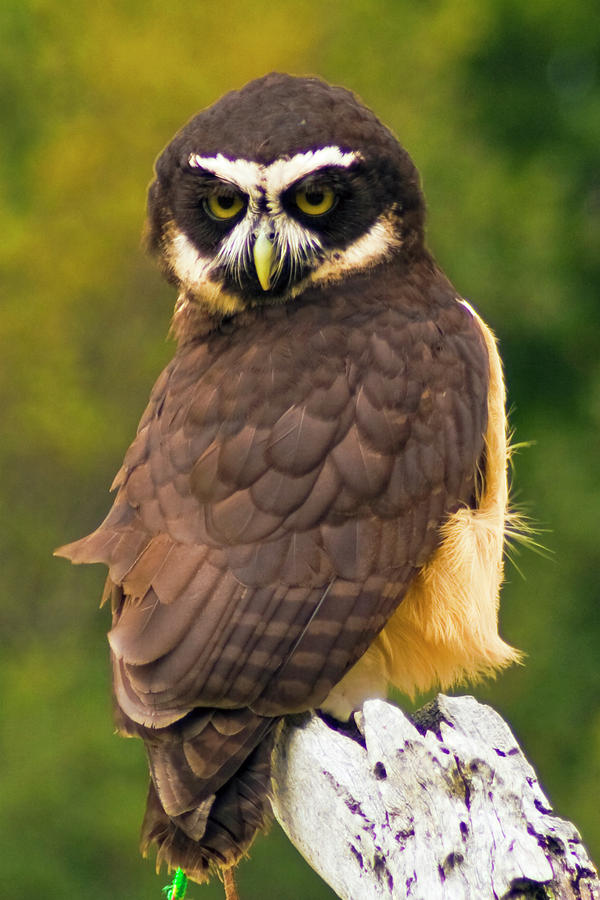
Spectacled owls, along with two other species, belong to the genus Pulsatrix, which is part of the family Strigidae or “typical” owls. The owls in the genus Pulsatrix are large, have stout beaks, strong feet and dark faces outlined by light feathers. The range of the spectacled owl reaches from southern Mexico, south to Paraguay, southern Brazil and northern Argentina. They occupy a variety of habitats from thick, humid rain forests and mangroves, to open woodlands. Spectacled owls have been observed at elevations up to 4,000 feet (1,220 m), but they predominately live at lower elevations. The spectacled owl stands approximately 17-19 inches (43-48 cm) tall and weighs 21-33 ounces (590-950 g). As with most raptors, the female is larger than the male. These large owls have dark heads and backs and buff-colored fronts. They have no ear-tufts. Spectacled owls have an unmistakable face pattern. Light circles around their yellow eyes give them the appearance of wearing glasses or spectacles; this accounts for their name. Juveniles are even more striking, often called “white owls” by local populations. Juveniles have white heads and bodies, dark brown wings and brown to black facial masks. Nesting can occur from January to August. Spectacled owls are cavity nesters, seeking out holes in trees to nest. Clutch size is normally two white eggs, with incubation lasting about 36 days. Approximately six to eight weeks after they hatch, fledglings are ready to take their first flight. The spectacled owl has a variety of distinct calls in the wild. Both sexes utter a rapid series of about seven low-pitched, short, rattling hoots sounding like hoo-hoo-hoo-hoo-hoo-hoo-hoo. Some who have listened to this call have remarked that it sounds something like a woodpecker's tapping. Another call used during flight is a short “whistle” that sounds like wer, which is often repeated about every 10 seconds. When the spectacled owl is alarmed, it may produce three or four descending low hoots that sound something like a growl. Juveniles produce more of a raspy call, “kweew.” The spectacled owl appears to be especially vocal on moonlit nights.

Japanese Long Tailed Tit

The long-tailed tit is a small, fluffy, pinkish bird; it would be the Bridget Jones of the bird world if only it were better fed. The flanks and shoulders are pink-brown; the eyes red; the wings black; and the tail, which is longer than the body, is black with a thin, white border. Like the English name, the Japanese name for the bird refers to the distinctive tail: It means “long handle.” Total length (including tail): 15 cm; wingspan: 18 cm. The bill is very small, and although long-tailed tits do not have much of a song, they make high-pitched “tsee-tsee-tsee” calls. Long-tailed tits are common residents of Japan, found from Hokkaido to Kyushu. They can be seen year-round. A social bird, they are often found in flocks of 20-30 birds, twittering in tall trees. They are acrobatic and energetic, and can be seen hanging upside-down on twigs searching for food. Their favored habitat is woodland, scrubland, farmland, parks and gardens. In winter they form flocks with other tit species. The nest of the long-tailed tit is a globular masterpiece of careful construction. Both the male and female in a pair cooperate to build it, using moss and lichen, animal wool, hair and fur, and silk from spiders’ webs. The resulting nest is lined with feathers (sometimes more than 2,000), forming a warm, elastic ball with a tiny side entrance. Construction may take up to three weeks. In this nest the female lays around a dozen small eggs that are about 14 × 10 mm and white with pink-red spots. As the chicks grow, the elastic nest grows too. Timing is crucial: If the nest is built before the spring leaves have opened, then jays and magpies will be able to see it and plunder it for eggs. The ready social behavior of the long-tailed tit pays off during the raising of the young: Other birds that have failed to breed often assist the parents, bringing food for the young. With so many mouths to feed, the parents benefit from the extra help. Long-tailed tits are vulnerable to the weather, and cold winters kill many individuals. However, their large brood sizes mean the populations can quickly recover. There is some data suggesting that long-tailed tits are starting to lay their eggs earlier in the year. The shift might be due to climatic changes and global warming.

King Eider

The king eider (Somateria spectabilis) is a large sea duck that breeds along Northern Hemisphere Arctic coasts of northeast Europe, North America and Asia. The birds spend most of the year in coastal marine ecosystems at high latitudes, and migrate to Arctic tundra to breed in June and July. They lay four to seven eggs in a scrape on the ground lined with grass and down. The king eider is circumpolar, found throughout the Arctic. It breeds on the Arctic coast of Alaska, Canada, Greenland, Svalbard and Russia, using a variety of tundra habitats. It winters in arctic and subarctic marine areas, most notably in the Bering Sea, the west coast of Greenland, eastern Canada and northern Norway. Wintering birds can form large flocks on suitable coastal waters, with some flocks exceeding 100,000 birds. It also occurs annually off the northeastern United States, Scotland and Kamchatka. The king eider is a large sea duck, measuring 50–70 cm (20–28 in) in length with a wingspan of 86–102 cm (34–40 in). Males are, on average, heavier than females, with a mean weight of 1.668 kg (3.68 lb) for males and 1.567 kg (3.45 lb) for females.[9] An individual bird's mass can vary considerably from season to season—from as little as 0.9 kg (2.0 lb) to as much as 2.2 kg (4.9 lb). Like all eiders, the species is sexually dimorphic; the male is slightly larger and, in breeding plumage, much more colourful than the female. The male is unmistakable with its mostly black body, buff-tinged white breast and multicoloured head. The head, nape and neck are a pale bluish grey. The cheek is pale green. The bill, separated rom the face by a thin black line, is red with a white nail and a large, distinctive yellow knob. Some tertials are curved up and form "spurs" along the back.

White-crested Turaco

White-crested turacos are one of the most colourful African birds. Their red and green colour is due to a special copper pigmentation which is unique to the turaco species. Look for a flash of red feathers on the underside of the turaco's wings as it hops through the trees. All turaco species have these feathers, which they show off during courtship displays. Turacos can fly, but they spend most of their time hopping through the trees of their forest habitat. Their loud calls help them communicate in the dense foliage. Both the female and male turacos sit on the eggs and help rear the chicks. Another distinctive feature is the birds’ toes. Each claw has a pair of toes that face forward and a pair that face backwards, so each bird has eight toes in total. All turacos have a more flexible toe on the rear of each claw that can move to the side, making it easier for the birds to grip branches and climb trees. The striking White Crested can easily be identified by its white crest, chin, neck and nape. In Africa, they have a large range and are considered common. They can be found in Cameroon, Central African Republic, Chad, Congo, Kenya, Nigeria, Sudan, and Uganda. Their preferred habitats include riverine forestry from 100 to 2200m, open woodland, and drier scrub areas.This species feeds on fruits, seeds, leaves and flowers, as well as the occasional arthropod. This species has an extremely large range, and hence does not approach the thresholds for Vulnerable under the range size criterion (Extent of Occurrence <20,000 km2 combined with a declining or fluctuating range size, habitat extent/quality, or population size and a small number of locations or severe fragmentation). The population trend appears to be stable, and hence the species does not approach the thresholds for Vulnerable under the population trend criterion (>30% decline over ten years or three generations). The population size has not been quantified, but it is not believed to approach the thresholds for Vulnerable under the population size criterion (<10,000 mature individuals with a continuing decline estimated to be >10% in ten years or three generations, or with a specified population structure). For these reasons the species is evaluated as Least Concern.

Ili Pika

You could call it one of the world's longest games of hide and seek. For more than 20 years, the Ili pika (Ochotona iliensis), a type of tiny, mountain-dwelling mammal with a teddy bear face, had eluded scientists in the Tianshan Mountains (map) of northwestern China. People have seen the furry critter only a handful of times since it was discovered by accident in 1983. In fact, people have spotted only 29 live individuals, and little is known about the animal's ecology and behavior. (Also see "Newly Discovered Carnivore Looks Like Teddy Bear.") Then, in summer 2014, researchers rediscovered the pika. Weidong Li, the species' original discoverer and a scientist at the Xinjiang Institute for Ecology and Geography, had gathered a group of volunteers in the Tianshan Mountains for some pika searching. At noon one day, as they were setting up camera traps, the team spotted their prize. "They found it hiding behind a rock, and they realized they had found the pika. They were very excited," said Tatsuya Shin, a naturalist in China who works with the pika's discoverers. In 1983, the Chinese government sent Li to the mountainous Xinjiang Province to study natural resources and infectious diseases. As Li explored a valley by Jilimalale Mountain, he saw a small, gray head sticking out from a crack in the rock. As he edged closer, Li got a look at its whole body. The animal was about 8 inches (20 centimeters) long, with large ears and several small brown spots in its gray fur. Li wasn't familiar with the species, nor were nearby herdsmen. Li caught a specimen and sent it to a scientist at the Chinese Academy of Sciences, who said he believed the pika was a new species. Although Li couldn't find any more pikas on a second trip to the area in December 1983, a third trip in 1985 was more successful, and the additional specimens allowed academy researchers to confirm that the Ili pika was new to science.

Nilgiri Marten

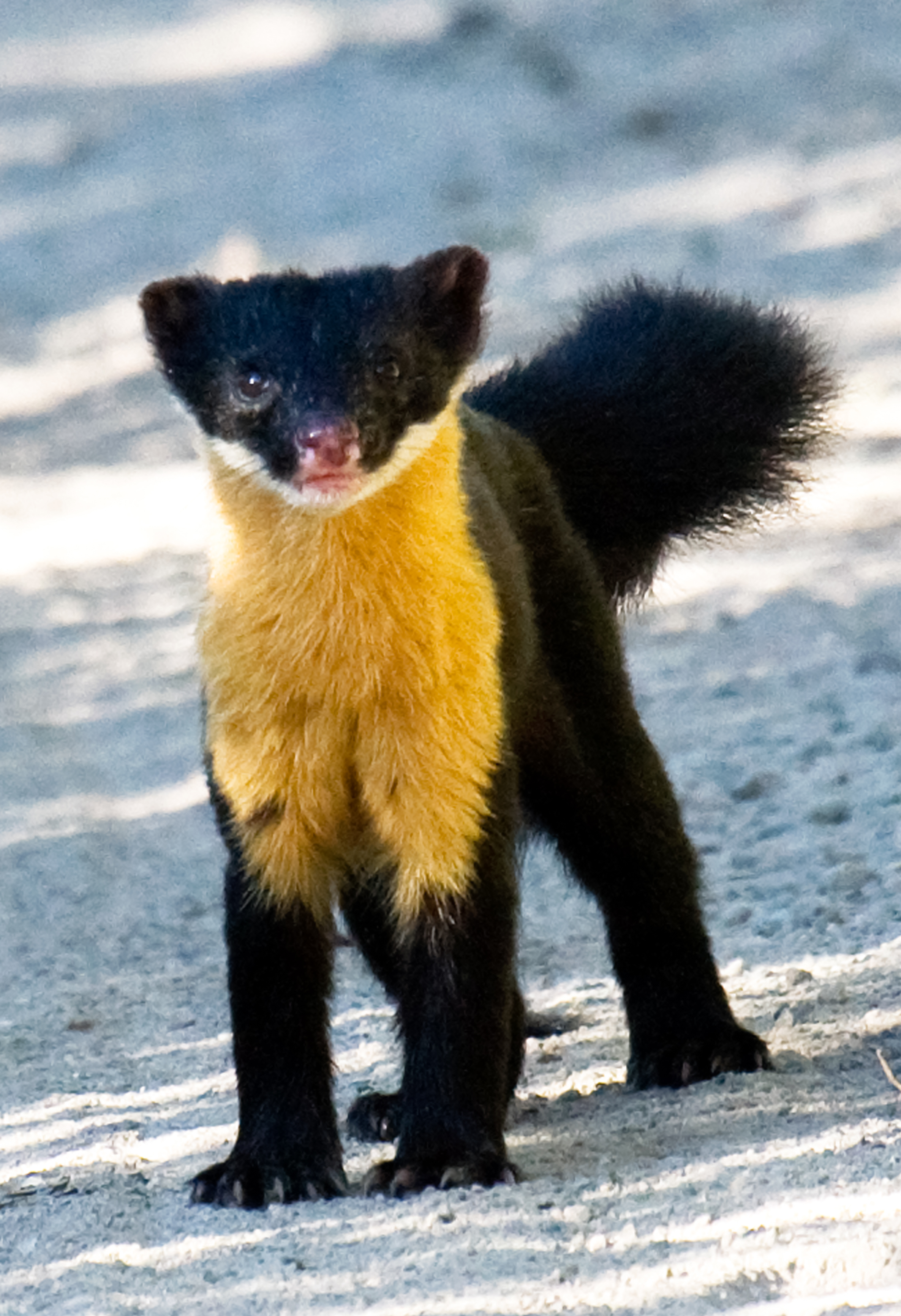
The Nilgiri marten (Martes gwatkinsii) is a slender and graceful mammal that is well-adapted to its semi-arboreal lifestyle. Like other martens, the Nilgiri marten is a medium-sized carnivore with wedge-shaped, rounded ears, a triangular face, moderately long body and short legs. This species is covered in soft, thick, dark brown fur, except for a striking yellow bib on its throat. It also has a bushy tail which helps it to balance, and large paws which are furry on the sole. The Nilgiri marten is very closely related to the yellow-throated marten (Martes falvigula). The Nilgiri marten and the yellow-throated marten have previously been classified as the same species by scientists. Little is known about the Nilgiri marten specifically but, like other martens in the family Mustelidae, it is an extremely agile creature. It is thought to use its strong, semi-retractable claws for clinging onto trees, and its elongated tail for stability and balance while climbing and leaping high in the treetops. Martens are generally considered active all year round and do not seem to have a set sleeping pattern, appearing to be active during the day and night. They are usually solitary animals, apart from during the summer when breeding takes place. Martens are generally polygamous breeders, and although the precise gestation period for the Nilgiri marten is not known, in most other marten species it lasts for around eight to nine months. The size of the litter can vary from one to five kits, which are born with very little fur and are blind and deaf for the first few days of life. The litter is usually weaned after about seven weeks. The young kits are able to hunt and kill their own prey by the time they are three to four months old.

Miniature Southdown Sheep

Olde English Miniature Babydoll Southdown sheep are an ancient breed with sweet, teddy bear faces. Because of their diminutive size, miniature Southdowns make outstanding weeders for use in orchards and vineyards -- they are only 24 inches tall when mature, and so can't easily reach tree branches or trellised grapes. Their small hooves help break the soil surface without compacting it. They move easily up and down hills, and can get into a field or vineyard much earlier than machinery can. And not only do they provide an organic alternative to pesticides and expensive mowing operations, their recycled grass (manure) helps improve soil fertility as well. Miniature Southdowns are usually white; however, there are also black (or brown) ones. They are easy to handle and are not aggressive. They are not wanderers and do not bother fences. Ewes are good mothers and often have twins and occasionally triplets. Care for miniature Southdown's is similar to that of other sheep, including sheering, vaccinating, foot trimming, and worming, however, as an ancient breed they are resistant to foot root and more resistant to parasites than other breeds. Their wool is short stapled and fine with a 19-22 micron count, which puts it in the class of cashmere. The Southdown breed of sheep originated in the South Downs of Sussex county, England.  They are one of the oldest of the Down breeds.  English farms kept these sheep for their dual-purpose--flavorful meat and fine fleece.  Early literature suggests that Southdowns were among the animals brought into the English colonies as early as 1640.  During this time, Britain strictly forbade the importation of sheep and the formation of America's budding woolen textile industry.  In fact, in 1698, the penalty for wool-trading or sheep-trading in the American colonies was having one's right hand cut off!  So spinning or weaving was an act of patriotism.  Wearing clothing crafted of American woolens was done with pride.  Both George Washington and Thomas Jefferson raised sheep and both chose American-made woolens to wear to their Presidential inaugurations. 

Friday, August 21, 2015

Golden Takin

The golden takin (Budorcas taxicolor bedfordi) is an endangered goat-antelope native to the Peoples Republic of China & Bhutan. Takins are adapted to staying warm and dry during winters in the Himalayan Mountain regions they inhabit. A thick, secondary coat is grown to keep out the cold. Their large, moose-like snout has large sinus cavities that warm up the air a takin inhales which prevents the loss of body heat by breathing. Although they have no skin glands, their skin secretes an oily substance that provides a water barrier that protects takins from the elements. They are around the same size as a cow and are very aggressive. Its skin is also said to be the source of the legend of the Golden Fleece. With horns like a wildebeest, a nose like a moose, a tail like a bear, and a body like a bison, the takin (rhymes with rockin') looks like a character from Dr. Seuss! This large, muscular, hoofed mammal is sometimes referred to as a goat antelope, because it has things in common with both goats and antelope. But the takin is most closely related to sheep and to the goat-like aoudad, or Barbary sheep, of North Africa. Takins have some neat adaptations that help them stay warm and dry during the bitter cold of winter in the rugged Himalayan Mountains. A thick, secondary coat is grown to keep out the chill, which they shed for the summer. They also have a very noteworthy nose! The large, moose-like snout has big sinus cavities to warm up the air inhaled before it gets to the lungs. Without this adaptation, takins would lose a large amount of body heat just by breathing. Yet another protection is their oily skin. Although takins have no skin glands, their skin secretes an oily, bitter-tasting substance that acts as a natural raincoat in storms and fog. Streaks of this oily stuff can be seen where takins rub up against the walls of their enclosures at the San Diego Zoo! Split hooves help takins move around easily in their rocky habitat. They also have an odor that smells like a strange combination of horse and musk. Both males and females have shiny black, crescent-shaped horns that grow from the center of their massive head and can reach up to 35 inches (90 centimeters) in length.

Mountain Goat

Mountain goats are not true goats—but they are close relatives. They are more properly known as goat-antelopes. These surefooted beasts inhabit many of North America's most spectacular alpine environments. They often appear at precipitous heights, from Alaska to the U.S. Rocky Mountains, showcasing climbing abilities that leave other animals, including most humans, far below. Mountain goats have cloven hooves with two toes that spread wide to improve balance. Rough pads on the bottom of each toe provide the grip of a natural climbing shoe. Mountain goats are powerful but nimble and can jump nearly 12 feet (3.5 meters) in a single bound. Mountain goats have distinctive beards and long, warm coats to protect them from cold temperatures and biting mountain winds. Their dazzling white coats provide good camouflage on the snowy heights. During the more moderate summer season goats shed this coat. Female goats (called nannies) spend much of the year in herds with their young (called kids). These groups may include as many as 20 animals. Males (known as billies) usually live alone or with one or two other male goats. Both sexes boast beautiful pointed horns, and in mating season billies will sometimes use them to battle rivals for prospective mates. In the spring, a nanny goat gives birth to one kid (sometimes two), which must be on its feet within minutes of arrival into its sparse mountain world. Mountain goats eat plants, grasses, mosses, and other alpine vegetation.